News

Hungry Beats Big



Every AI founder wants the same thing: a product that grows because people can't help sharing it.
Over the past year, the likes of Cursor, Lovable and ElevenLabs have shown just how powerful product-led growth (PLG) can be when AI dramatically shortens the gap between trying a product and experiencing its value.
That has understandably reignited interest in PLG, but also created a number of misconceptions. Some founders assume PLG either works immediately or not at all. Others think product-led companies don't need marketing, or that enterprise sales and PLG are fundamentally incompatible.
Those assumptions came up repeatedly when we brought together more than 40 founders and CROs from Europe's leading AI companies for Visionaries' annual Go To Market Day. In a session co-hosted with Varun Anand (Clay) and Steve Rotter (DeepL), we discussed to what extent PLG has genuinely changed in the AI era.
These are the ideas that stayed with me.
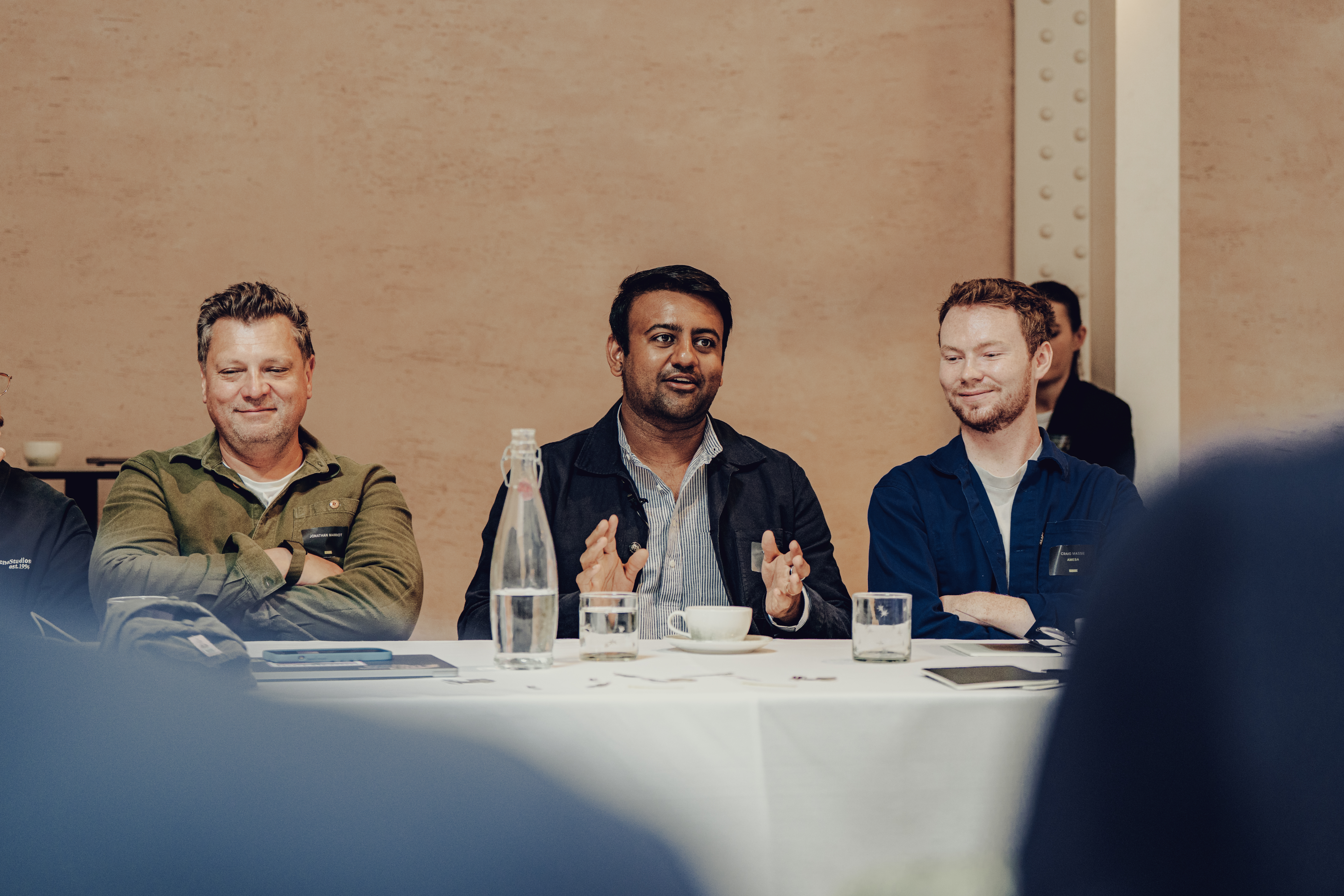
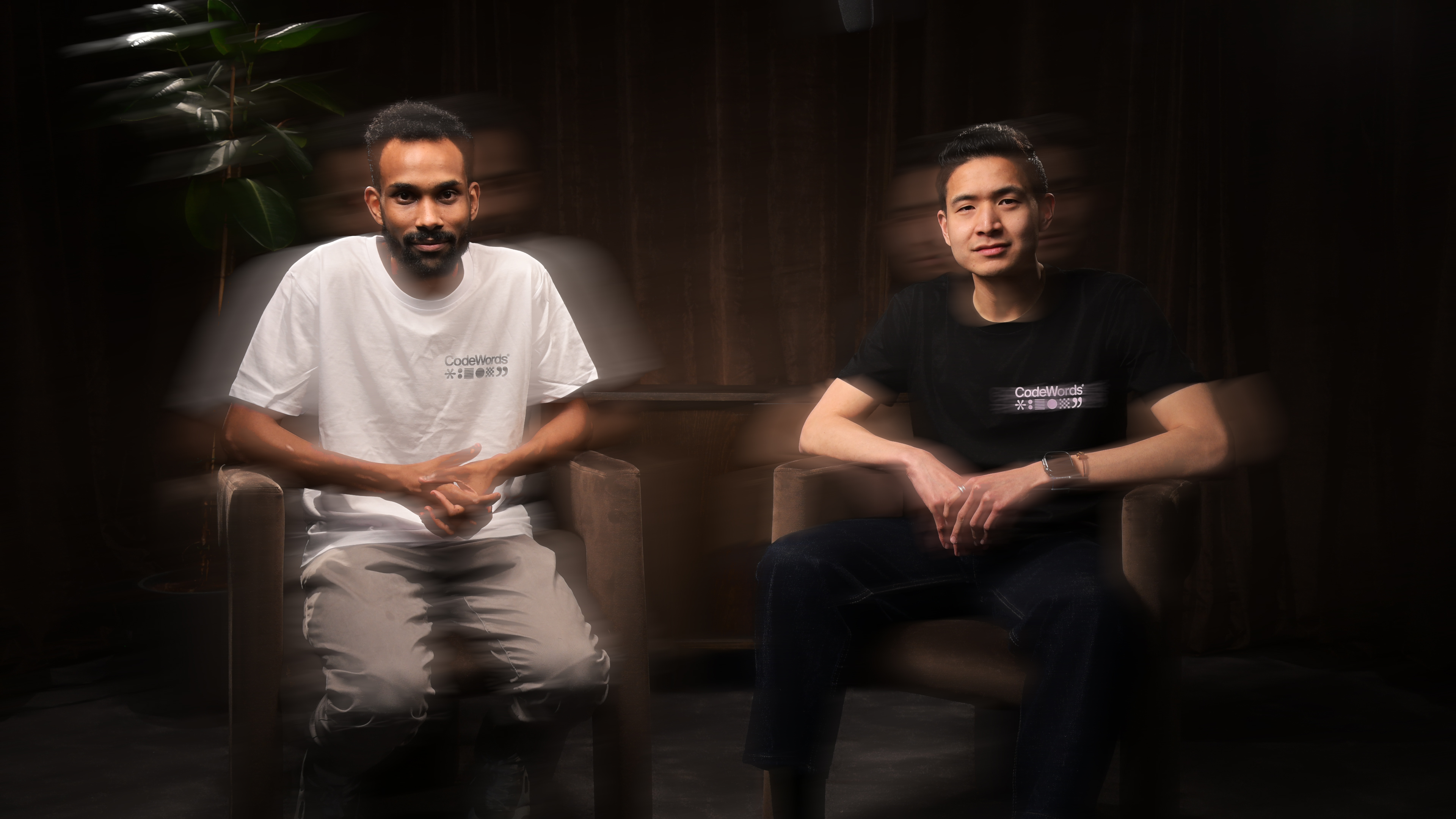
Co-host Varun Anand, Co-Founder and COO of Clay, during Visionaries GTM-Day in London in June 2026.
PLG has been the growth driver behind some of the most iconic SaaS companies, turning them into the fastest-growing software companies of their time, like Dropbox, Slack, Figma, or Notion. Yet, today PLG delivers even more explosive growth, as companies like Cursor, Lovable, ElevenLabs, and others have proven. Based on publicly available data the ten fastest growing PLG-based AI companies have grown more than 3 times faster than their SaaS counterparts.
The most important reason for that acceleration is that the “value gap” between sign-up and the first time a user experiences the product’s core value can now be reduced to almost zero. Gamma, for example, allows a user to enter a topic in a single line and generates a complete presentation within a minute. In addition, many AI products also produce outputs that are immediately shareable, whether that's a website created with Lovable or an audio clip generated with ElevenLabs.
The combination of near-instant value and naturally shareable outputs allows AI companies to attain much faster growth. In addition, it also expands the range of products that can realistically succeed with a product-led motion, compared to the SaaS era, where PLG was only an option for relatively few products.
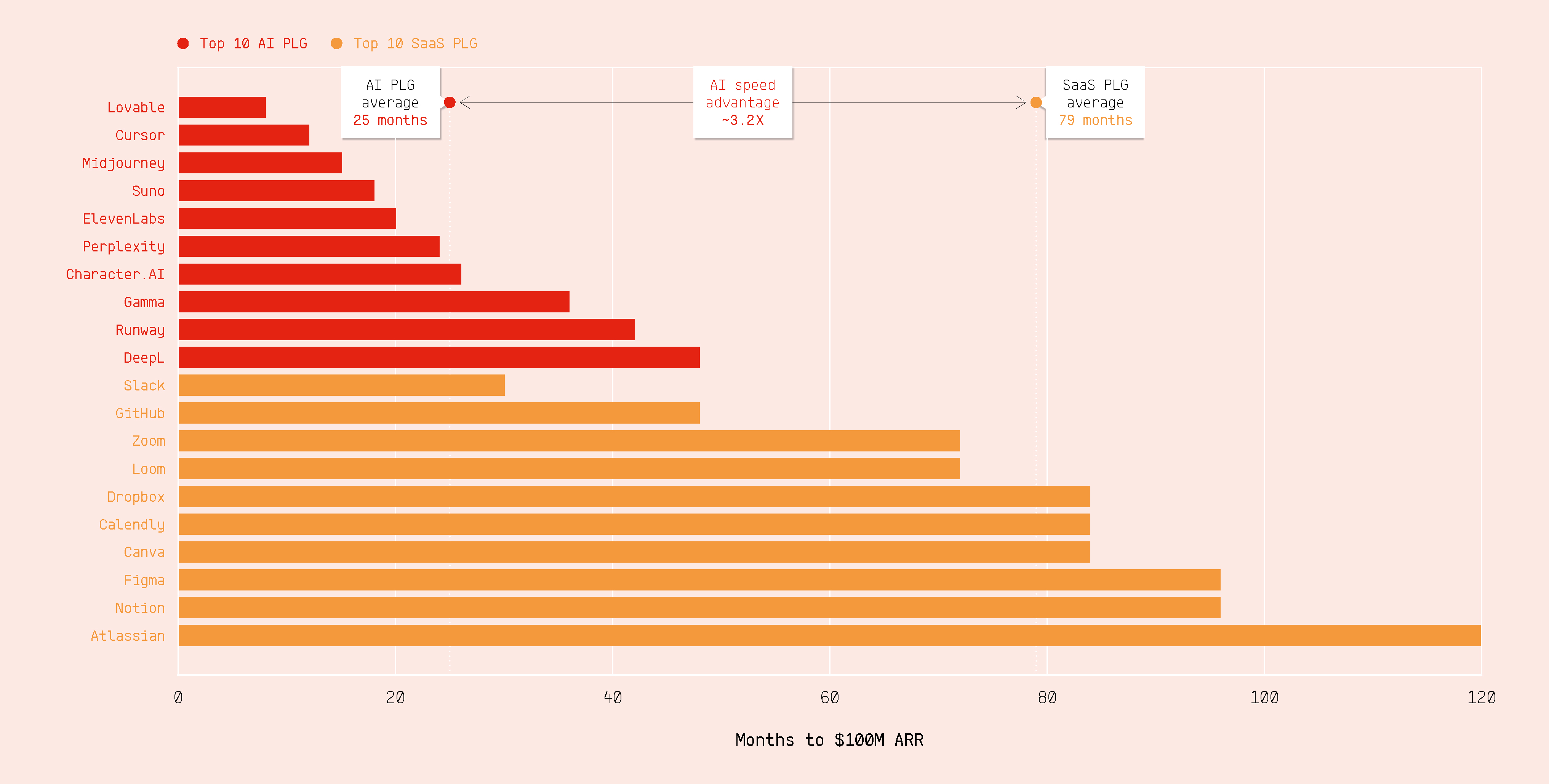
Data Sources: Sacra, Openview Partners, S1 filings, Claude.
That's exactly why I think founders need to resist dismissing PLG too early.
Some AI products lend themselves naturally to product-led growth. Others are more complex, making it less obvious whether they can become product-led businesses. That doesn't mean founders should dismiss PLG. With the right focus, many products can be optimised to deliver near-instant value and naturally shareable outputs. DeepL, for example, experienced strong viral growth from day one because users immediately recognised the quality of its translations.
Clay is a good example. Its product wasn't obviously suited to PLG in its early days. Instead, the company deliberately engineered its way towards a product-led motion by relentlessly improving the user experience over time. That experience is likely to be far more relevant to many AI founders than the stories of products that appeared to "go viral" overnight.
Questions to ask yourself
How quickly does a new user experience your product's core value?
Is your product naturally creating something people want to share?
Have you ruled out PLG too early simply because the first version of your product wasn't ready?
Clay’s founders were always convinced that their product had PLG potential. Yet, when they began talking to customers, it took eight demos to sign a deal. It was clear the product needed a lot of work before it was a fit for PLG. Clay’s founders decided to kick off a dedicated initiative.
The first step was identifying a group of users who immediately understood the product's value and were willing to help improve it. Rather than targeting their eventual ideal customer profile (ICP), Clay focused first on what you might call an "early ICP": lead generation agencies that were technically sophisticated and immediately recognised what the product could do.
Once that group had been identified, the next challenge was understanding exactly where users struggled.
Rather than relying on traditional product demos, Clay adopted a technique called reverse demos. Instead of demonstrating the product themselves, they asked prospects to bring a genuine business problem to the meeting and solve it using Clay while sharing their screen. The team would only intervene when necessary. Every hesitation, every question and every point where users became stuck revealed friction in the self-serve experience. This is one of my favourite examples of product-led optimisation because it shifts the conversation away from "Can we explain the product better?" towards "Why does the product still need explaining?"
The process took almost a year. Most of these conversations were led by Clay's co-founder and COO himself, sometimes conducting as many as 10 sessions a day. The product improved continuously as a result, and Clay started expanding the group they talked to beyond agencies. Over time, fewer and fewer demos were needed, until eventually they could be eliminated altogether. The value gap disappeared.
Customers could now understand the product, set it up themselves and experience value without needing someone to guide them.
There's a broader lesson here. The journey from "eight demos to close" to fully self-serve rarely happens through one redesign or one new feature. Instead, it usually comes from hundreds of conversations, careful observation and an almost obsessive focus on removing friction wherever customers encounter it.
Questions to ask yourself
Who are the early adopters who genuinely understand your product today?
Where does your self-serve experience still depend on explanation?
How are you learning from customers every week—and are those insights feeding directly back into product development?
Once your product is successfully delivering PLG, can you just rely on the product to do the job, or do you need to support it with marketing and sales? The consensus during our GTM Day was that, for many AI products, it is indeed best to hold off on setting up a sales motion for a while (more on that later). But there was broad consensus that you do need marketing from day one, and that marketing support has to be in sync with PLG. But, how does this look?
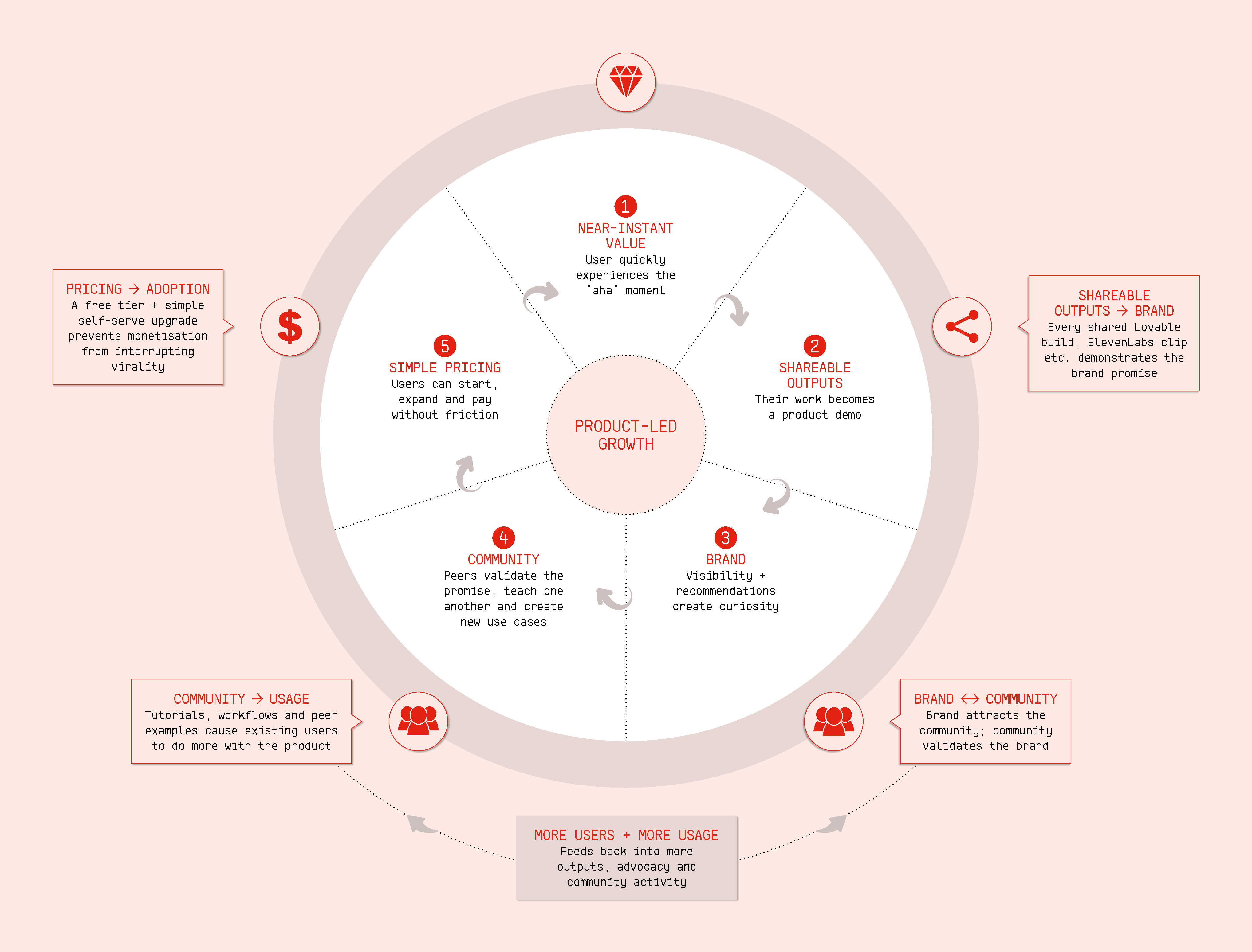
In our opinion, a marketing strategy tailored to optimally support PLG has two cornerstones. Brand is one of them. Word of mouth is central to PLG. If a product has a strong brand associated with innovation, or efficiency, or being used by the leaders in a certain industry, people are more likely to try it and to tolerate any initial moments of friction. In addition, brand can also be enough to make people refer products to others. If you recommend a product that stands for, say, innovation, you are not just being helpful; you also make a statement about yourself. This is why successful PLG companies need to be very clear on what they want to stand for and get that message out.
The second cornerstone is Community. Community is the scalable social infrastructure that fosters word of mouth and validates brand promise. Every B2B purchase requires trust—in the product, in its staying power and in the professional judgment of the person recommending it. Community builds that trust exponentially, through thousands of simultaneous peer-to-peer interactions. Community also critically supports brand; it validates the brand promise, which would otherwise just be empty marketing speak. And finally, it helps build a moat. Users share their successes with the product; this creates new use cases, tricks and tips. They see their peers doing more sophisticated things with the product and expand their own usage rather than plateau.
The importance of an early focus on brand and community is illustrated by some of the most successful PLG-driven AI-companies. For example, Cursor's brand is unambiguous. It redefines how serious developers work. That identity was established through senior engineers at respected companies vouching for it publicly on X and in engineering blogs. The brand promise of "You work at a fundamentally different speed" spread because recommending Cursor made the recommender look forward-thinking, not just helpful. The community formed organically on Reddit and X, and then deepened the brand by producing tutorials, demos, and workflow breakdowns that verified the promise. Founder visibility amplified both.
Lovable's brand is equally clear: “regardless of whether you can code or not, you are now a builder”. That promise was established before the commercial product even launched. The company’s founder spent two years building a personal brand on social media, sharing raw numbers, failed experiments, and half-formed ideas. The open-source predecessor GPT-Engineer seeded 300,000 advocates who became day-one users. The community then formed largely through user-generated content. Every shared Lovable build was simultaneously a product demo and a brand validation, and even came with a ‘Lovable Score’.
For ElevenLabs, the founding story itself was the first brand tactic - two Polish engineers frustrated by badly dubbed American movies. Brand building then continued through voice-demonstrations that were genuinely surprising. They were so compelling that people wanted to share them regardless of whether they planned to use ElevenLabs as a product. Developers then extended that momentum by building and showcasing applications on top of the platform, while the Voice Library transformed users into contributors rather than simply customers.
The details differ, but the pattern is remarkably consistent. Brand creates curiosity. Community creates credibility. Together, they accelerate product-led growth.
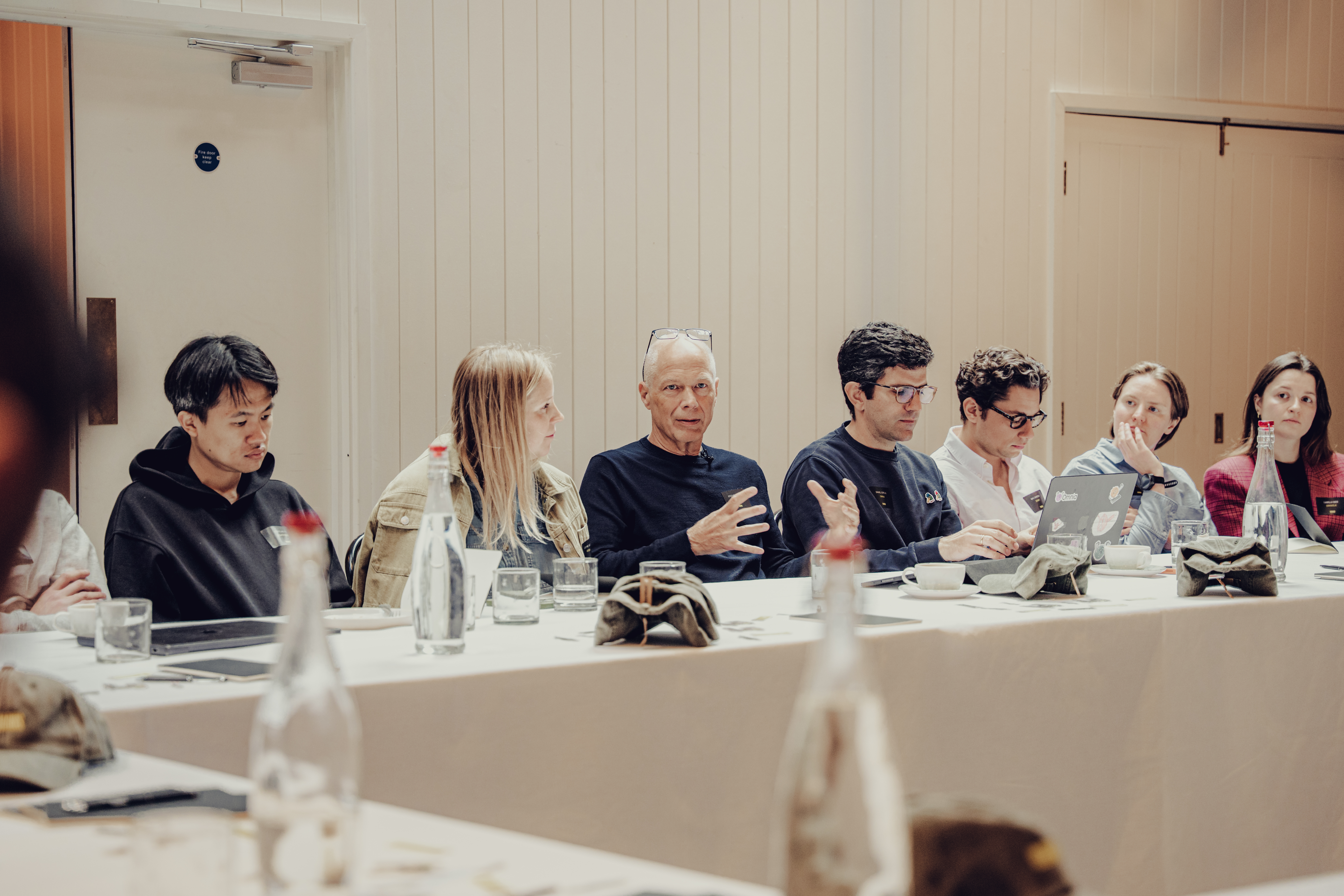
One final observation from our discussion stood out to me: brand and community need to be founder priorities. The strongest communities I've seen almost always reflect the founders behind them. Their beliefs, their curiosity, and the way they engage with customers become embedded in the company's identity. That isn't something that can simply be delegated.
Questions to ask yourself
What do you want your company to be known for before people even use the product?
Where are customers learning from one another today, and how are you helping those interactions happen?
If you stepped away from your company's brand and community tomorrow, would they continue to strengthen, or would they lose momentum?
Another critical component of any successful PLG strategy is pricing. Pricing is where AI-specific complexity is hard to dodge, and the industry is visibly mid-cycle on how to handle it. Nevertheless, there are a few common elements across AI companies with strong PLG momentum.
Co-host Steve Rotter, CMO of DeepL, during Visionaries GTM-Day in London in June 2026.
For most products, the free tier limits usage rather than functionality. Users can explore the product properly, understand what makes it valuable, and then naturally encounter a point where upgrading makes sense.
From there, companies typically introduce one or two paid self-serve plans.
These plans remain intentionally simple. Rather than requiring customers to speak to sales, users can upgrade to paid plans immediately, in exchange for higher usage limits and - in most cases - some additional features that become valuable for more advanced users, such as integrations, APIs, shared workspaces, or priority support.
A key question for these pricing plans is how to define “usage”. This is where things become interesting. Traditional SaaS products often charge per seat, but AI companies increasingly charge according to what customers actually do with the product, giving rise to “credit”-based pricing. However, the exact definition of a credit varies considerably.
At ElevenLabs, credits broadly correspond to the amount of text converted into speech. Lovable prices according to prompts, with a complex prompt consuming more credits than a simple one. Other companies use entirely different approaches, reflecting the fact that the industry is still experimenting with how best to measure usage.
The details differ, but they're all trying to solve the same problem: finding a pricing model that reflects the value customers receive rather than simply counting users. That isn't always straightforward: the closer pricing reflects value, the more complicated it often becomes. The simpler pricing becomes, the easier the self-serve experience feels—but the harder it becomes to capture the full value being created.
Pricing therefore becomes another optimisation problem. Like product design itself, it requires constant experimentation.
One broader trend also stood out during our discussion.
AI companies want pricing to reflect outcomes rather than inputs, which makes intuitive sense. Customers care about the results software delivers, not the number of tokens consumed behind the scenes.
At the same time, AI companies cannot ignore the economics of inference because compute is expensive. Several companies - including Lovable and Clay - have responded by introducing what has become known as dual-meter pricing. Their pricing plan has two components. One meters the value customers receive, while the second meters the economics of serving them.
I suspect we'll continue to see experimentation here. The industry hasn't converged yet, and that's exactly what makes pricing one of the most interesting strategic questions facing AI founders today.
Questions to ask yourself
Does your pricing make it easy for customers to experience value quickly?
Are you charging for users, usage, or outcomes—and does that reflect how customers think about value?
Is your pricing simple enough to encourage self-serve adoption while still allowing you to capture the value you create?
AAll this leaves one more question. When is the right time to add a Sales motion?
The risk of adding sales too late is clear: you leave dollars on the table, and you give competition an opportunity to take market share.
The risk of adding a sales motion too early is more subtle. At the core is the danger of stifling your PLG motion. Sales will bring in users that would not have self-selected. This changes the composition of the user base, thereby diluting your community. New users arrive with different expectations, use cases, levels of product sophistication, and willingness to engage with the community on the community's own terms. The tone of the community will shift from "look what I built" to "this doesn't work for my use case”, and the evangelists who built the community will feel like the product is moving away from them.
This will mean engineering priorities inevitably shift too. More time is spent building capabilities for individual customers and less time improving the product for everyone else. Before long, you've stopped adding enterprise sales to a product-led business and started replacing product-led growth with a sales-led motion. We saw versions of this happen during the SaaS era with companies such as Zendesk, Intercom and HubSpot.
Now, when is the right time, and how do you recognise it? The right time is probably when PLG creates users in the system who are interested in upgrading, but where upgrades aren’t happening in self-serve. There are several signals that suggest you've reached that point. Firstly, you begin seeing multiple users signing up from the same company, then larger organisations start requesting demos and security reviews become commonplace. Before you know it, procurement teams and legal departments start to appear in conversations.
Historically, SaaS companies often reached this point once average contract values consistently exceeded around $20,000. For AI companies, where margins are often lower but PLG can be substantially faster, a threshold closer to $40,000 may prove more realistic. The exact number will vary, but the underlying principle won't.
Ultimately, sales should accelerate the momentum your product has already created, rather than replace it.
Questions to ask yourself
Is sales helping customers buy more easily, or compensating for weaknesses in the product?
What signals suggest customers are naturally trying to expand beyond self-serve?
If you hired ten salespeople tomorrow, would they strengthen your product-led motion—or gradually replace it?
More on Johann's Substack: https://substack.com/@johannbutting.




Visionaries
Visionaries
Visionaries
Judith Dada
Robert Lacher
Judith Dada
Isabella Yamamoto
Visionaries
Visionaries
Visionaries