Perspectives

Product-led growth: Where AI companies differ from SaaS


Since founding Visionaries in 2019, we've been obsessed with the promise of automation. Wouldn't it be lovely to get rid of the repetitive, cumbersome tasks that slow down most businesses? Large enterprises are increasingly able to do this through tailor-made workflows and dedicated engineering resource. But for the vast majority of smaller and medium-sized businesses, the promise of real automation still hasn't been delivered.
The gap isn't about AI capability but about who can actually use it.
The teams who would benefit most from automation are the ones least equipped to build it: finance ops, marketers, agency operators, founders running lean teams. They don't have engineers. They don't want to learn a new DSL or babysit a brittle workflow that breaks every time an API changes. Vibe coding tools have partially closed this gap, but a prototype isn't a production-ready workflow. A workflow that runs once in a demo isn't one that runs five hundred thousand times a month across messaging tools, file systems, signature platforms and CRMs without anyone watching.
So the work stays manual. And the businesses that would benefit most from agentic automation don't get it.
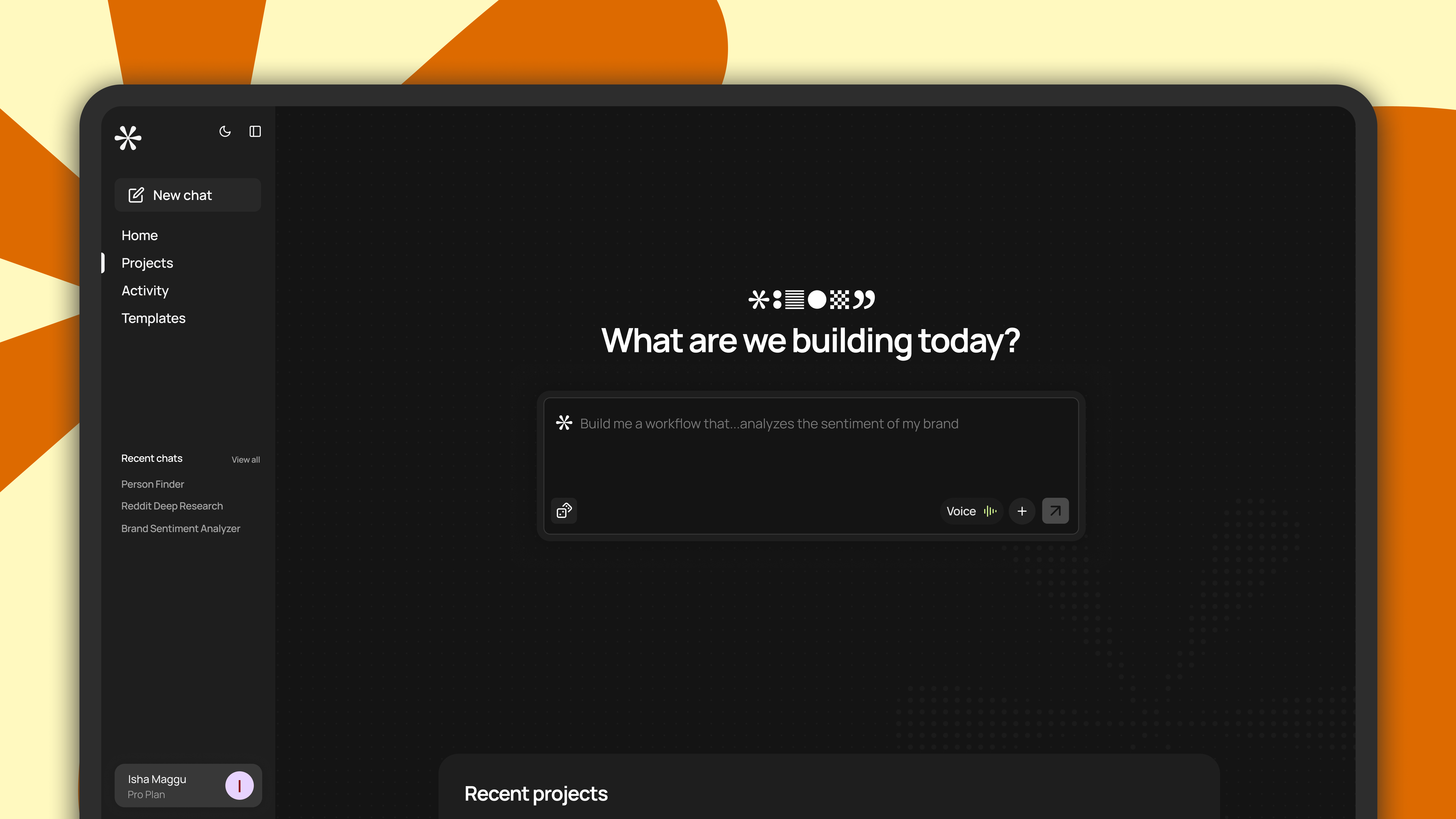
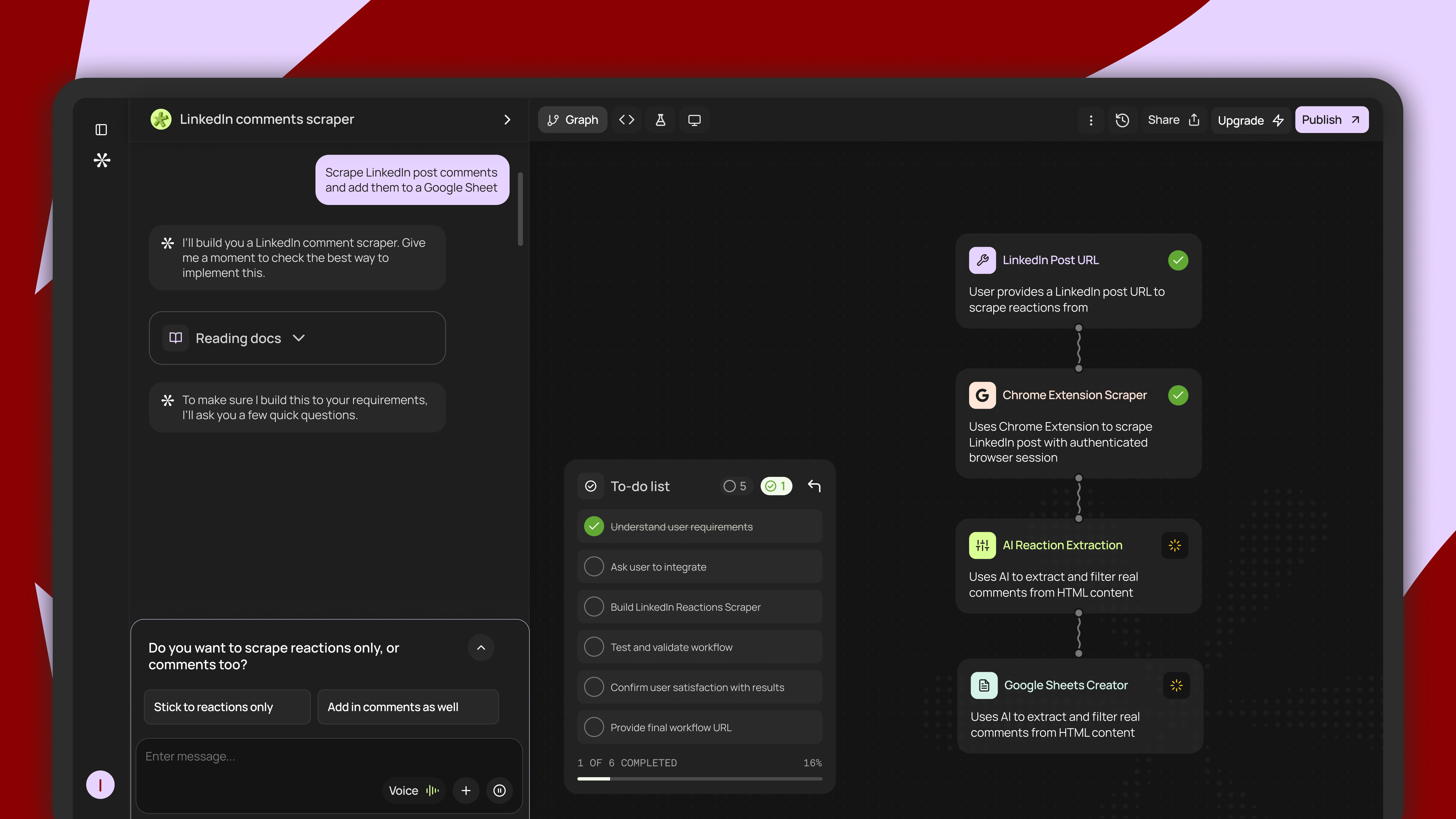
At the core of CodeWords’ platform is Cody, an AI agent that learns a business' tools, goals and patterns from day one. Describe an outcome, and Cody handles the rest: deployment, integrations, maintenance - the entire scaffolding that normally requires an engineer. It doesn't just react either; it suggests and builds additional workflows itself.
The examples already running on the platform are the kind of thing that used to need a sprint. A content agency pointing Cody at its social channels - Cody now finds relevant content, drafts posts, sends them via WhatsApp for approval, and publishes automatically. An automation agency deploying Cody-built agents across its client base to handle lead generation at scale. And closer to home, Visionaries using Cody to manage CRM hygiene across WhatsApp, Notion and email. 500,000 tasks a month run on this infrastructure today, the vast majority for people who can't write code.
As of May 2026, CodeWords is shipping three new capabilities: contextual memory, so Cody learns from past activity and acts before it's asked; WhatsApp support, so it reaches users where they already work; and Cody modes, which adapt how it plans and executes depending on the task.
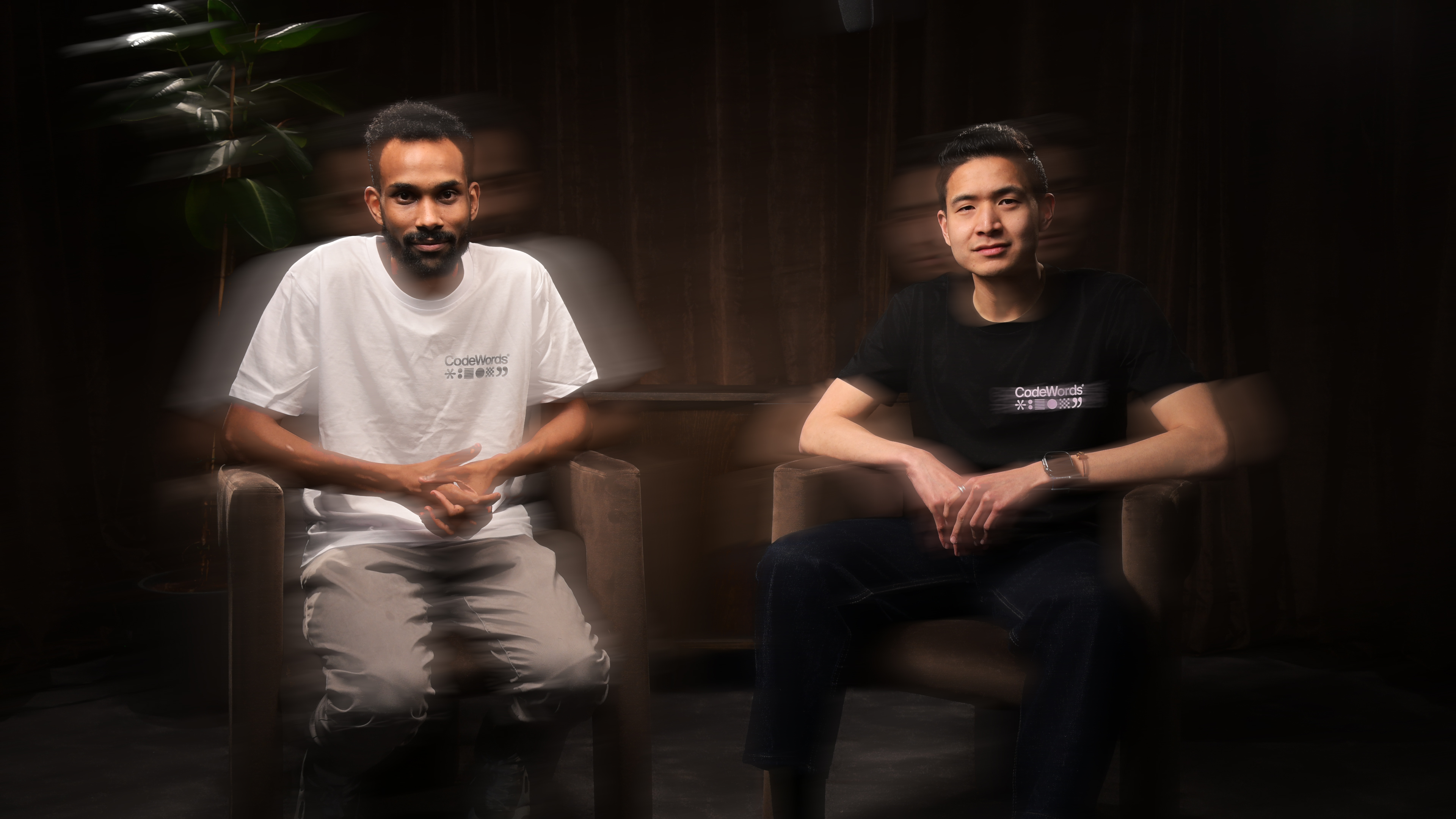
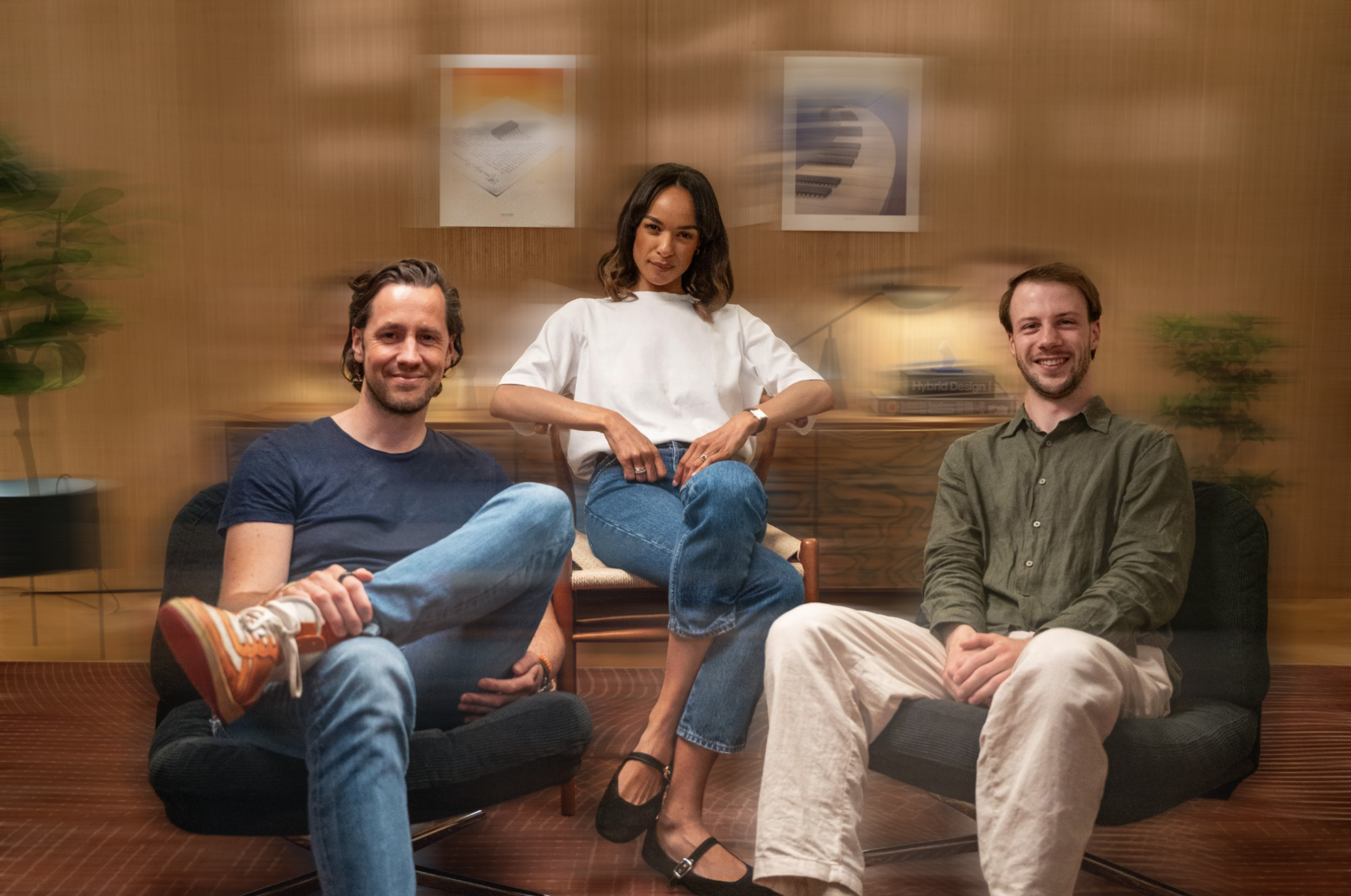
To build something this ambitious in a competitive space, you need founders with unusual speed, conviction, and very little patience for the status quo. Aymeric Zhuo and Osman Ramadan have all three.
Aymeric grew up in French Guiana, in the grocery and restaurant his parents had built from nothing - immigrants from rural China who spoke just enough French to get by. He went on to study Engineering at École Polytechnique, then worked as a data scientist on Candy Crush and a product manager at TikTok.
Osman grew up in a village outside Khartoum, in a household regularly visited by the intelligence services because his father, an academic, was politically outspoken. He learned to program at eleven without a computer, before studying at Cambridge and working as a research scientist at Microsoft.
CodeWords is the product of a deliberate refocus. The company began as Agemo, an AI research lab whose neurosymbolic approach to reasoning through code was featured in the ARC-AGI benchmark alongside OpenAI in December 2024. But Aymeric and Osman concluded the research, however promising, was a distraction from a more important question: what would it look like to build an agent that actually worked for the non-technical, non-AI-first people out there? Within months they had pivoted, and CodeWords was in beta.
We are living through a shift in what software looks like. The first wave of AI showed up as assistants and copilots. The next will show up as agents that operate, not just assist - and the companies that win will be the ones who deliver outcomes for people who don't speak the language of technology.
We're proud to lead CodeWords' $9M seed alongside firstminute capital, Sequel and Illusian and a list of angels that includes Andrey Khusid, Mati Staniszewski, Hanno Renner, Robert Gentz, Ilkka Paananen, François Chollet, and leaders from OpenAI, Mistral, n8n and Zapier.
This is what hungry beats big looks like in AI infrastructure, and it's why we couldn't be more excited to be partnering with Aymeric, Osman and the CodeWords team.



Visionaries
Visionaries
Visionaries
Judith Dada
Robert Lacher
Judith Dada
Isabella Yamamoto
Visionaries
Visionaries
Visionaries